October and November is a time of change for our garden birds for several reasons. From August birds leave gardens to take advantage of a glut of natural food – berries, nuts, seed and invertebrates – and they haven’t fully returned yet. As breeding ends some birds, like tits, finches, starlings and corvids forget territories and join the safety of flocks with many eyes making food finding easier. There’s also a changing of the guard as the last summer migrants have left and winter migrants like redwings and fieldfares arrive. Numbers of common garden birds blackbirds, robins and tits then start to increase as birds from colder northerly climes move south to warmer areas.
Wild berries come in sequence starting with rowen, then elder and brambles, then hawthorn, then holly and mistletoe, and lastly ivy in midwinter; wild nuts and seeds are from grasses, thistles, scabious, hazelnuts, beechmast, teasels and the like. For insectivores there’s a glut of spiders and insects and as soil softens worms and leatherjackets become top of the menu for rooks, jackdaws, blackbirds, buzzards and various mammals until the frost starts to bite.
What to look out and listen for
On early October nights listen overhead for high pitched ‘seeep’ calls of migrating redwings. Robins and wrens are regular singers through winter and on sunny still days we might hear a song thrush, blackbird or great tit feeling songful. Of course, simple contact calls of flocking birds are commonly heard.
Our latest dragonfly is the migrant hawker. Slightly smaller than our other hawkers, they occur often in numbers from late August and can be seen hawking and sunning themselves as late as November. Hoverflies are still preset on ivy flowers until the frosts, along with small tortoiseshells and red admirals. In autumn moths are still plentiful and varied, so good feeding for bats.
At this time of year bats start ‘swarming’ when they gather in large numbers outside their winter roosts. This rather mysterious event happens every autumn and is a time for mating but is also thought to be used for teaching this year’s young aspects of bat behaviour.
Autumn is best known for leaf colour and leaf-fall and peak of toadstool season. The two are connected as fungi along with earthworms are the main agents of breakdown of fallen leaves, through which nutrients are returned to the soil.
Things to do (and not do)
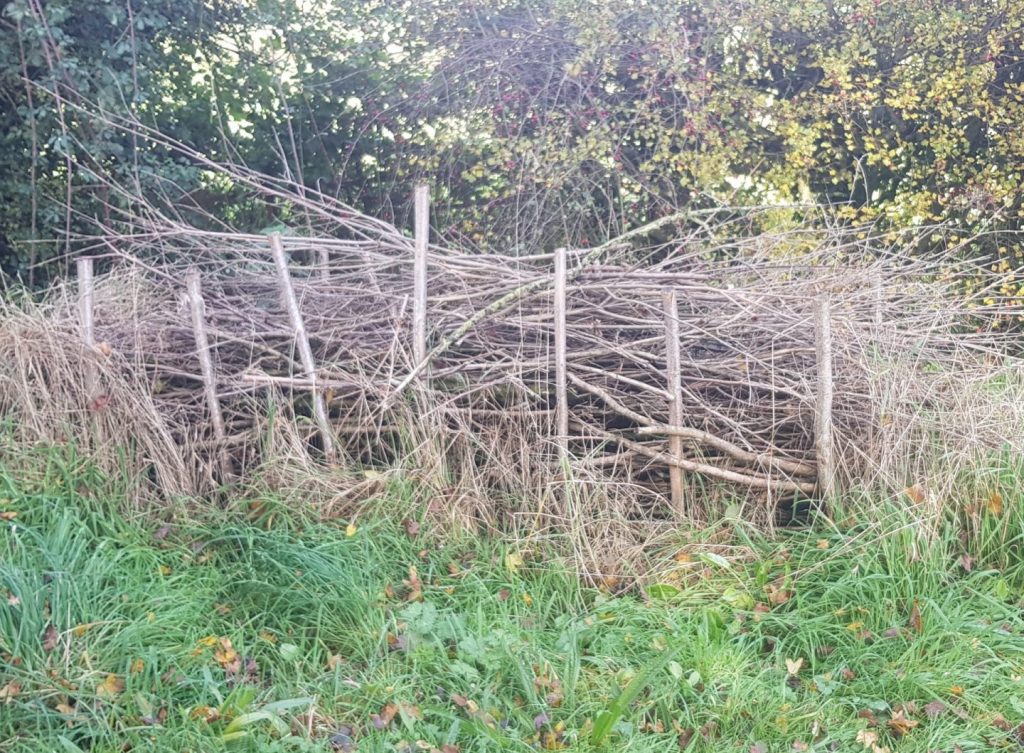
Now is a busy time in the wildlife garden centred around providing shelter, food and water for your wildlife through winter. Clean out bird boxes and replace with fresh bedding and put up new ones now as birds like to roost in them in winter and may breed there next year. Place hedgehog houses in undisturbed corners or under bushes where they won’t get flooded. If cutting back bushes and trees why not build a dead hedge that provides shelter and future nesting sites to wildlife. Leave dead plant stems and flowerheads to provide cover for spiders and insects, leave the full garden tidy until Feb/March, and leave leaf piles.
Clean out ponds of excess weed and dead plants in October as frogs might hibernate in the bottom mud any time soon and net against fallen leaves. I’ve started feeding fats to birds by now and continuing with sunflower seeds and peanuts. Don’t forget to provide clean water throughout winter.
Wildlife Plant of the Month
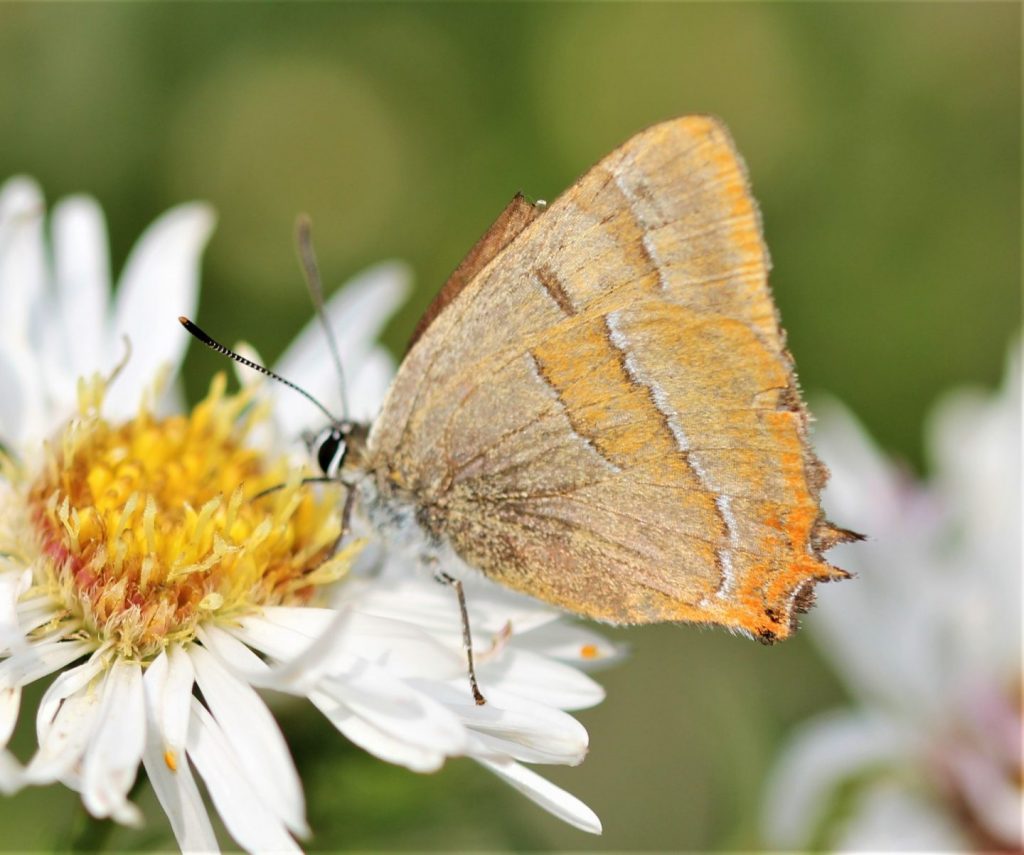
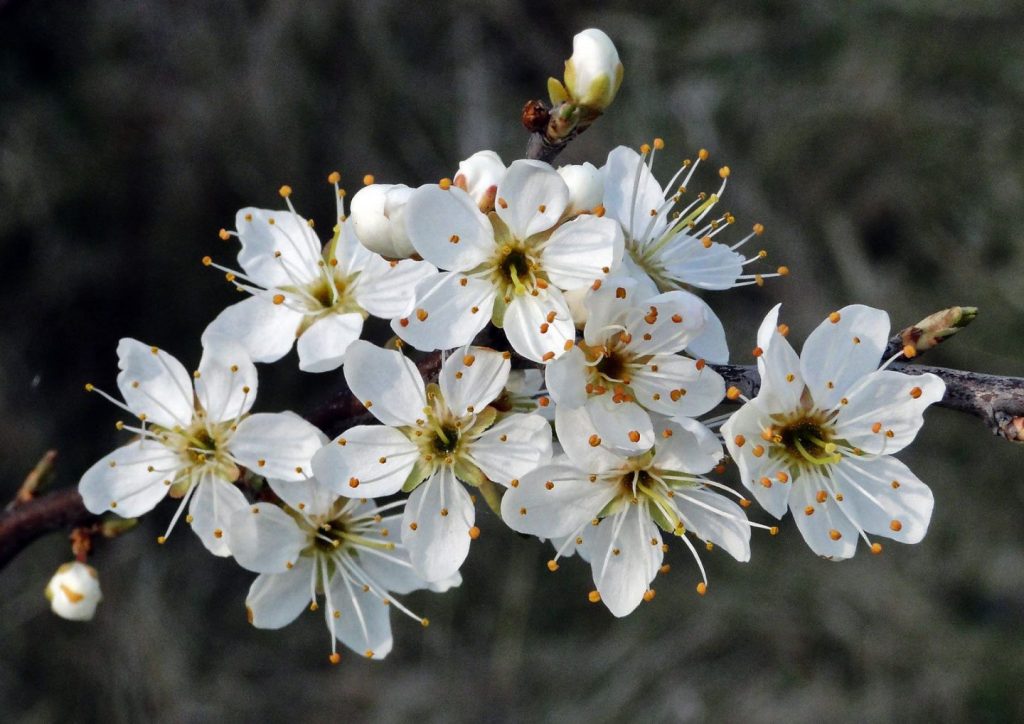
As Blackthorn loses its leaves its well-known fruits, sloes, become more obvious. Long lasted as they are initially loaded with astringent tannins but with frost they soften and sweeten so becoming attractive to thrushes and pigeons. Blackthorn is also a valuable resource for insects throughout the year. Its lovely simple white flowers are a precious early nectar and pollen source. It’s the food plant of caterpillars of both brown and black hairstreak butterflies and a variety of moths. During the summer the impenetrable thorny bushes are a favourite nesting site for a range of birds.